Is my training actually progressing?
RWA looks beyond a single good or bad run and evaluates workload, consistency, frequency, aerobic development and longer-term training trends.

Garmin, COROS, Strava and other platforms can collect thousands of data points about your training. Run With Analytics is being built to turn that history into useful endurance context: how you are developing, what you have demonstrated, and what your training currently supports.
A watch can tell you how far you ran, your pace, heart rate, elevation and power. The harder questions require context across weeks, months and sometimes years of training.
RWA looks beyond a single good or bad run and evaluates workload, consistency, frequency, aerobic development and longer-term training trends.
Durability analysis uses longer efforts to examine late-run pace, heart-rate response and aerobic decoupling instead of treating every kilometre equally.
Performance estimates use demonstrated training evidence and recent fitness rather than relying only on a generic race calculator.
Race goals add distance, surface, elevation, timing and training evidence so readiness can be considered against the event you are preparing for.
Environmental context helps distinguish a performance change from the cost of heat, humidity and other conditions when suitable data is available.
Running stays central while walking, hiking, cycling, swimming and strength can provide context around the wider workload of an endurance athlete.
Endurance athletes change watches, platforms and sensors. RWA is being designed around the athlete rather than a single hardware ecosystem.
Supported connections and historical imports build the activity history RWA can analyze.
RWA evaluates your own volume, long-run exposure, consistency, climbing, durability, environment and performance evidence.
The goal is not another wall of numbers. It is to make the numbers useful when evaluating training and preparing for a race.
A 5K and a 100-mile race cannot be understood from pace alone. As distance increases, time on feet, long-run depth, back-to-back exposure, climbing, durability, fueling, environmental conditions and sustained consistency become increasingly important. RWA is being built to reflect that.
Recent speed, aerobic fitness and demonstrated race-level efforts help establish current shorter-distance capability.
Volume, long runs, consistency and durability become increasingly important as the target moves toward the marathon.
For ultras, RWA can place greater emphasis on time on feet, climbing, long-run depth, back-to-backs and demonstrated endurance exposure.
Explore the measurements, comparisons and explanations that turn recorded activities into a clearer view of your preparation.
These product examples show one training history and race goal. Your insights depend on the activities and data available in your account.
Review weekly distance, late-run pace change, climbing exposure and pace relative to heart rate. Trends help you see how these different parts of your training are developing.
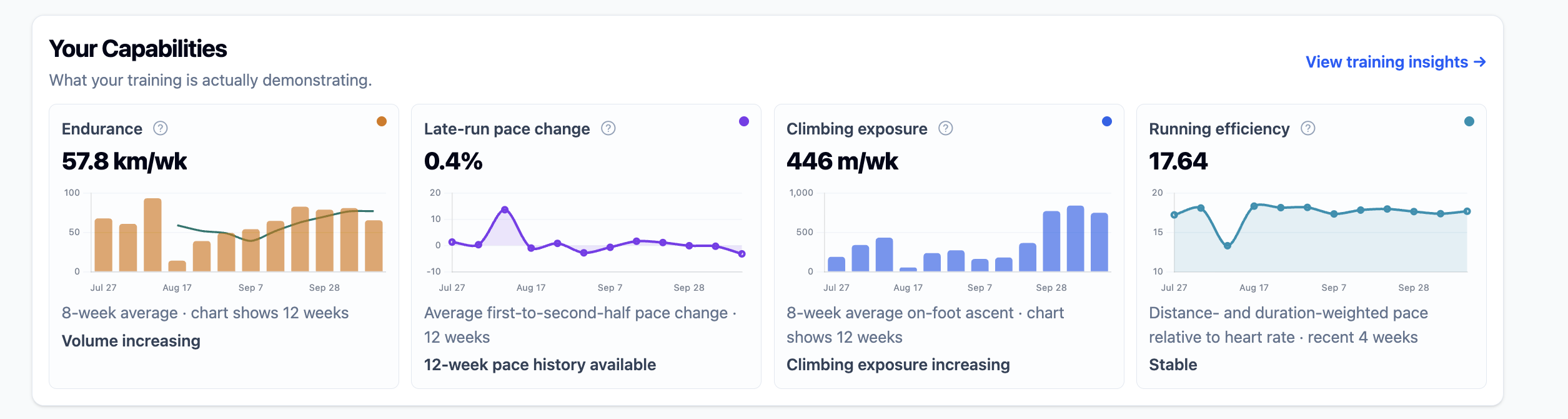 Open full-size screenshot
Explore 12 weeks of running volume, elevation and efficiency alongside recent training load. Each explanation includes the available evidence and the limits of what it can tell you.
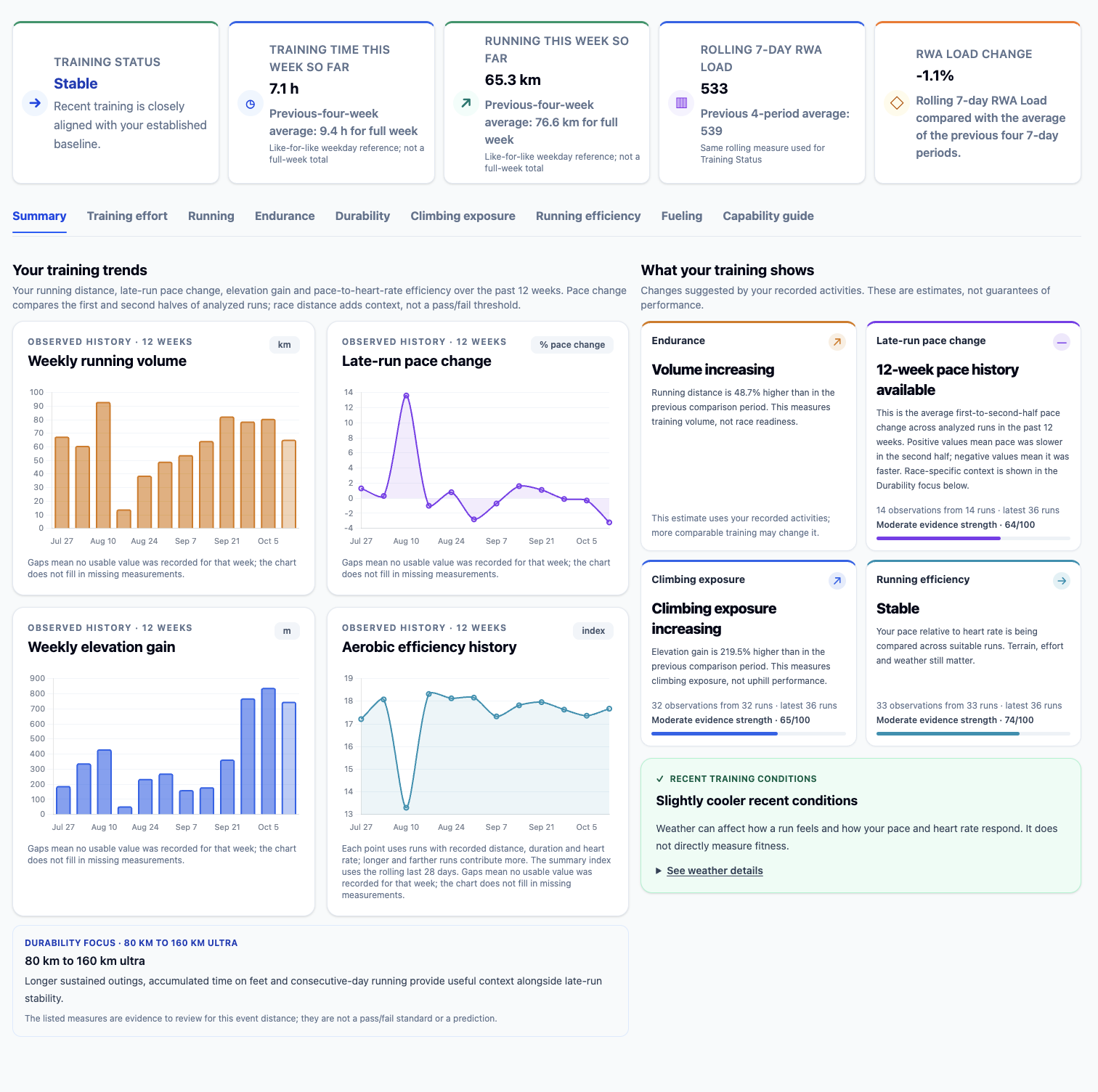 Open full-size screenshot
Follow your pace-to-heart-rate history and review the measurements behind the trend. Terrain, effort and weather matter, so a faster run alone does not establish a fitness change.
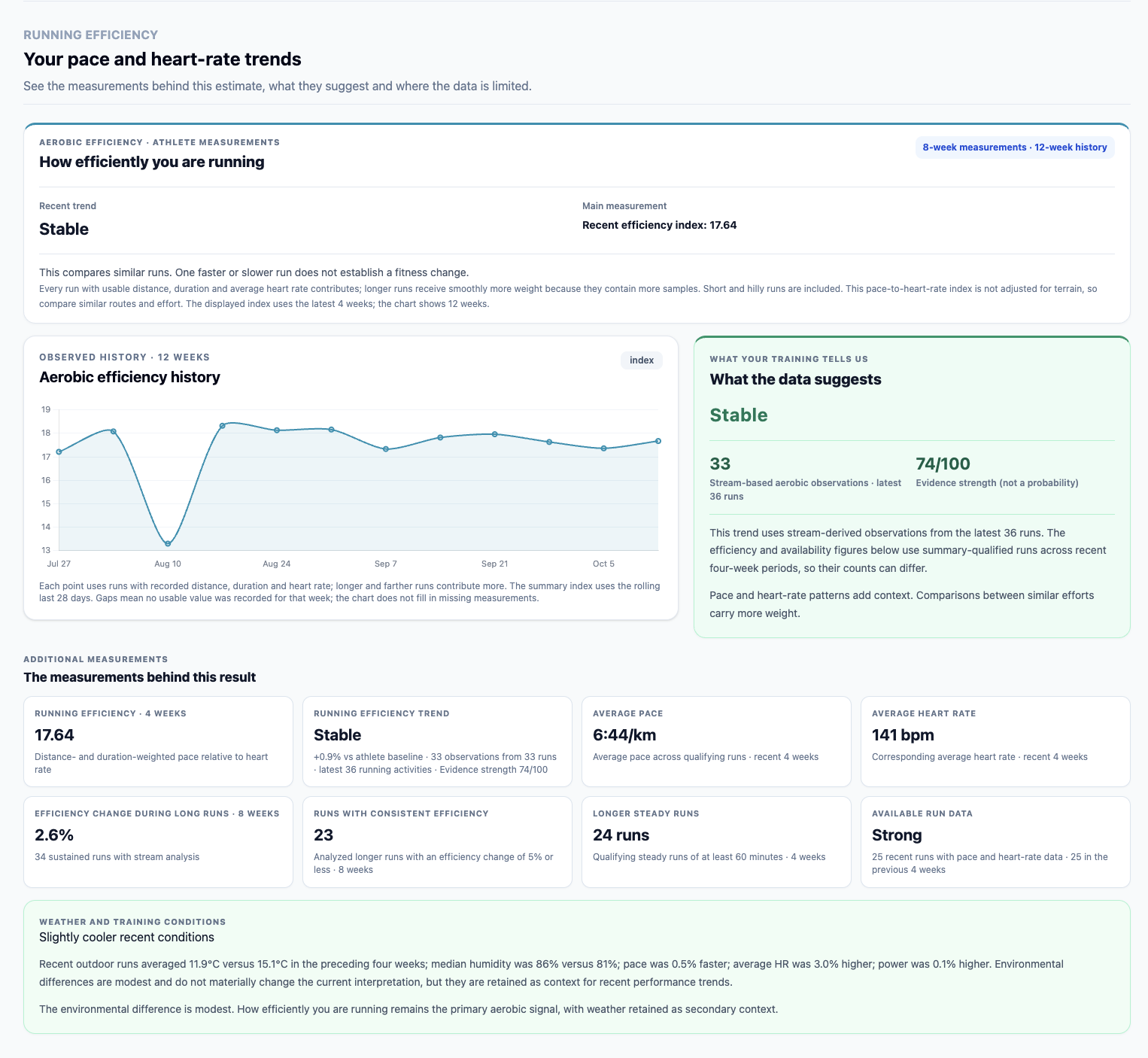 Open full-size screenshot
Explore the target course profile alongside recorded uphill and downhill exposure. Course comparisons describe the training you have recorded; they are not prescribed training targets.
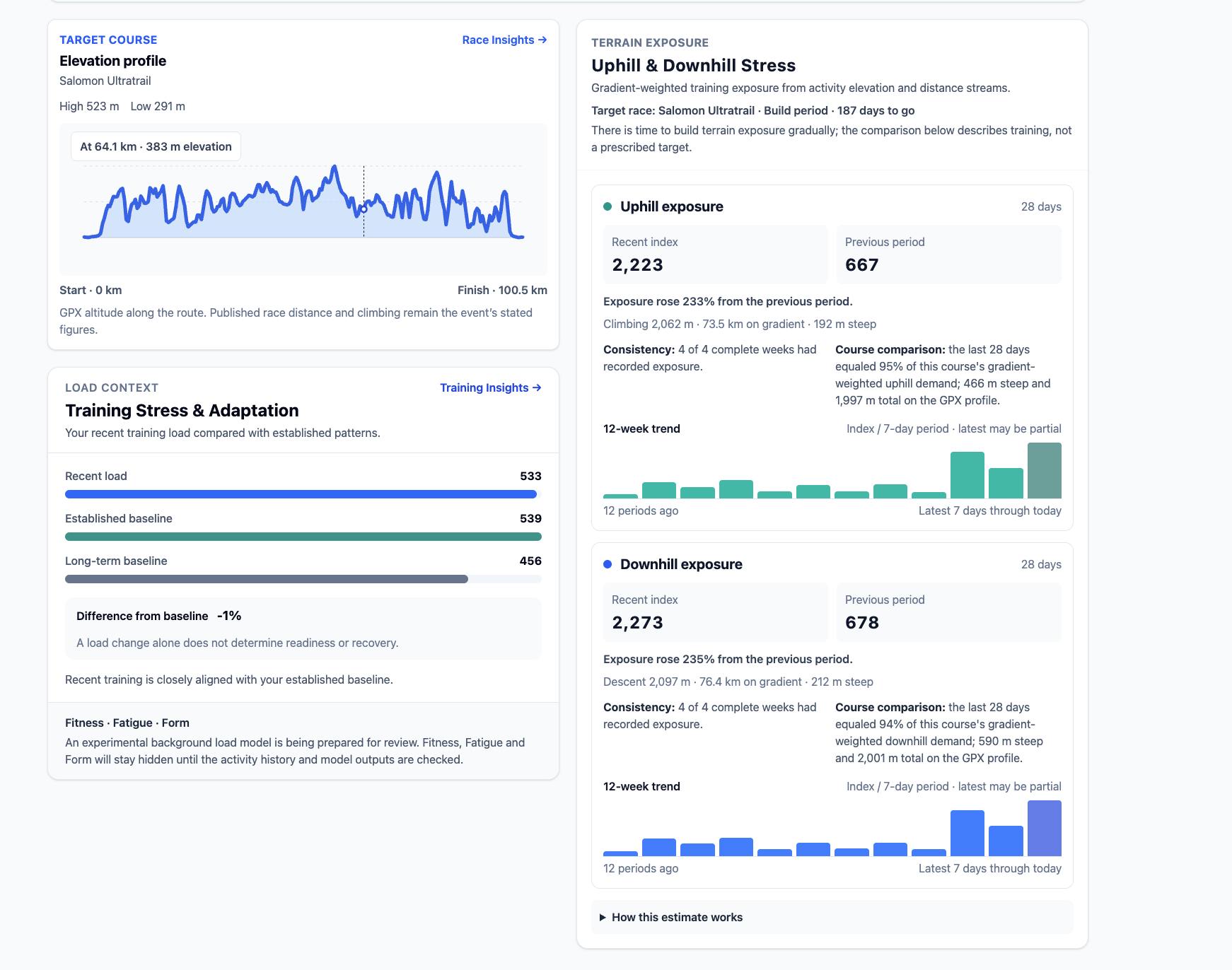 Open full-size screenshot
See course demands, time remaining, goal feasibility and the main preparation priority together before exploring the supporting detail.
 Open full-size screenshot
Compare endurance, late-run stability, climbing preparation and aerobic efficiency with your chosen race. Review long-run evidence and the areas where recorded preparation is limited.
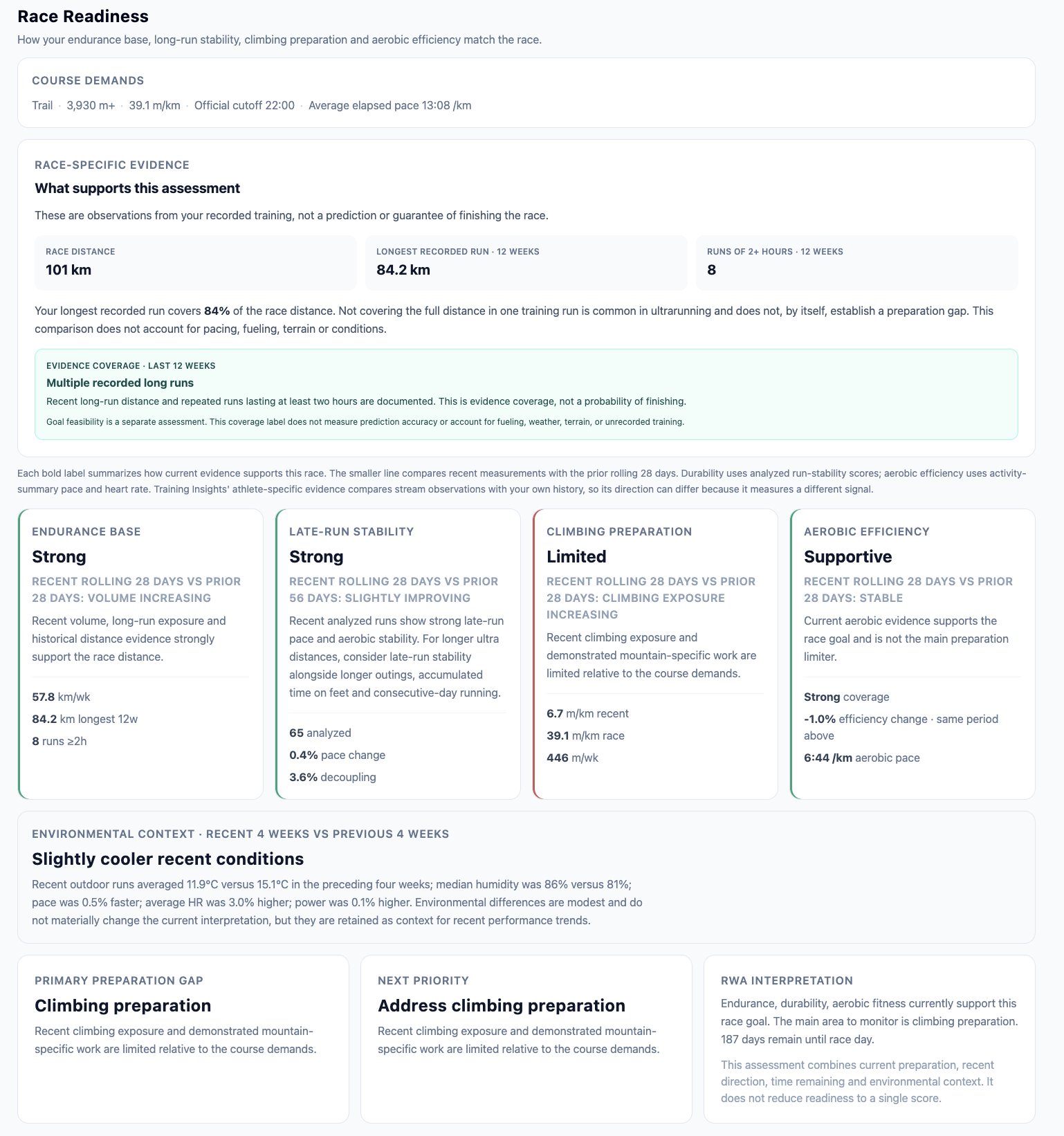 Open full-size screenshot
Review the evidence supporting your finish or target-time goal, the official cutoff context and the next preparation priority. Goal feasibility is an assessment, not a predicted probability of finishing.
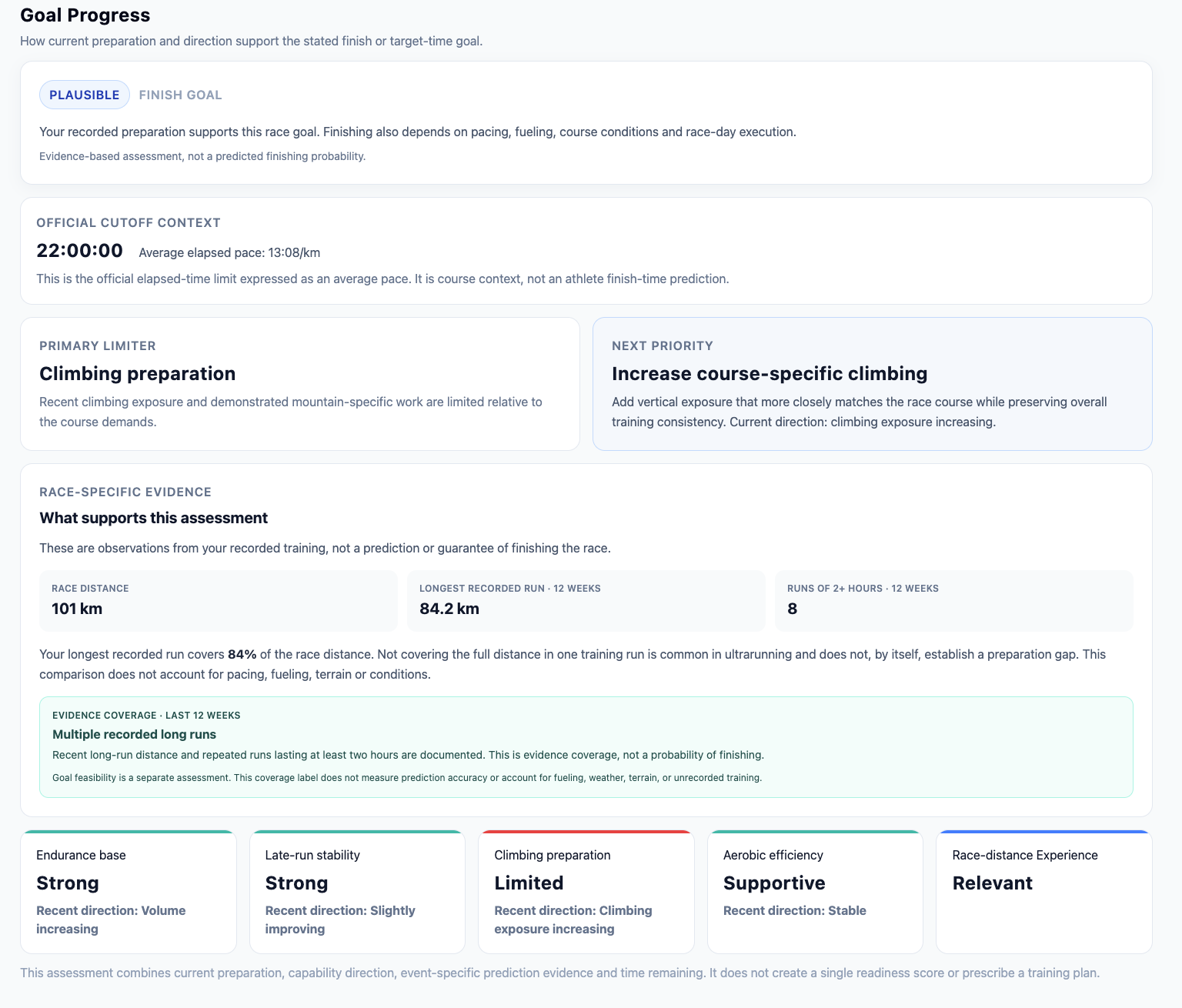 Open full-size screenshot
Compare completed training blocks to see which areas are improving or stable. Direction and current preparation answer different questions: an improving area can still be your main preparation gap.
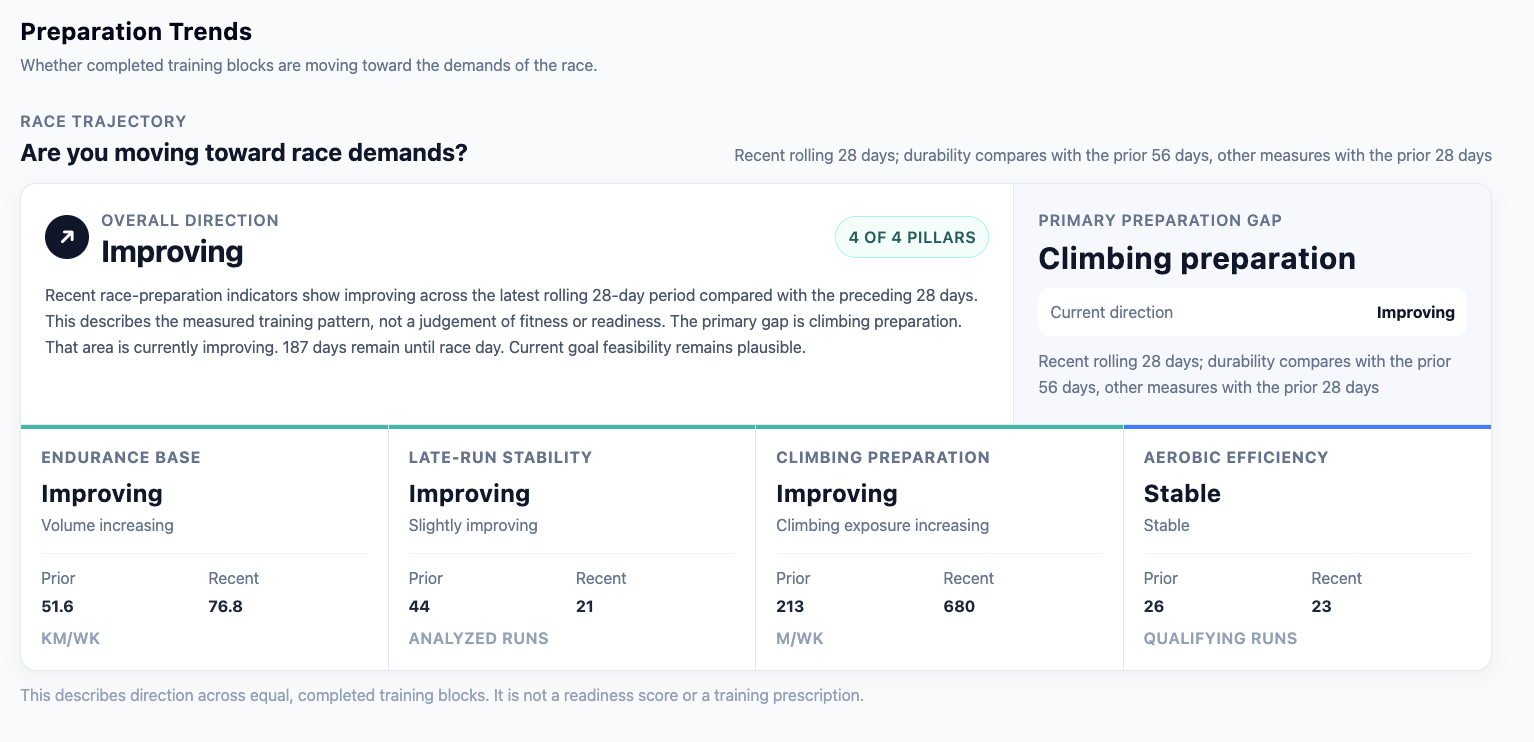 Open full-size screenshot
Recorded training provides evidence, not a guarantee of race-day performance. Pacing, fueling, terrain and conditions still matter.
Explore your trainingRun With Analytics is not trying to replace your watch. It is being built to help you understand what all that recorded training means when viewed together.